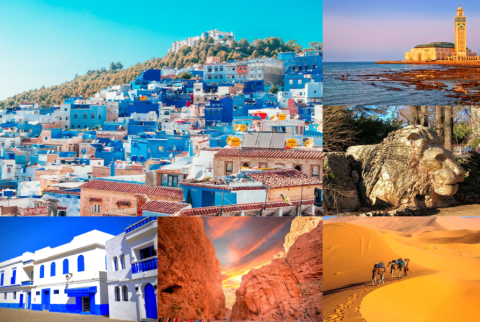
Have you ever wondered what it feels like to step through the pages of a history book and walk among centuries-old walls that still whisper tales of sultans, scholars, and spice traders? Morocco’s imperial cities aren’t just destinations on a map—they’re living, breathing chronicles of an empire that once stretched across North Africa and into Europe.
Picture this: seven days winding through cobalt-blue alleyways, standing before gates that have witnessed the rise and fall of dynasties, and tasting flavors that have traveled the ancient caravan routes. This isn’t your typical vacation. It’s a pilgrimage through time itself, from the Mediterranean breezes of Tangier to the ochre sunsets of Marrakech.
Why the Imperial Cities Matter More Than Ever
In an age where travel has become about ticking boxes and collecting Instagram shots, Morocco’s imperial cities offer something profoundly different. These aren’t reconstructed theme parks or sanitized tourist attractions. Fes, Meknes, Rabat, and Marrakech—along with the enchanting Chefchaouen—form a constellation of cultural treasures that have survived invasions, earthquakes, and the relentless march of modernity.
Each city served as a capital at different points in Morocco’s storied past, and each bears the architectural and spiritual fingerprints of the dynasties that ruled from within their walls. The Almoravids, Almohads, Merinids, and Alaouites didn’t just build cities; they crafted civilizations that became beacons of learning, art, and commerce in the medieval world.
Days 1-2: Exploring Chefchaouen, the Blue Pearl of Morocco—Where the Sky Meets the Earth
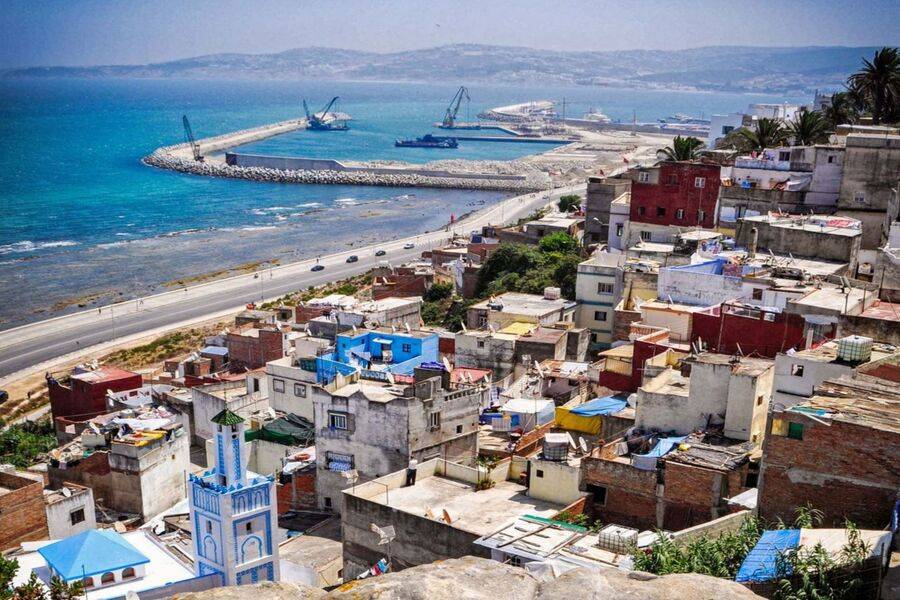
Your journey begins not in one of the four traditional imperial cities, but in a place that feels like it was painted by the gods themselves. Chefchaouen, the blue pearl of Morocco, cascades down the Rif Mountains like a waterfall frozen in shades of azure and cobalt.
The moment you step into its medina, you’ll understand why travelers often extend their stays here indefinitely. Every corner reveals another photo-worthy scene, but it’s not just about aesthetics. The blue walls—originally painted by Jewish refugees in the 1930s to symbolize heaven and spirituality—create a cooling effect in the summer heat and a sense of tranquility that’s almost meditative.
Wander through the Plaza Uta el-Hammam as evening falls. The scent of mint tea mingles with fresh bread from nearby ovens. Local artisans display their wares—hand-woven blankets in geometric patterns, leather goods that smell of tanneries and tradition, and silver jewelry that catches the fading light. This is Morocco at its most photogenic, yes, but also at its most authentic.

Day 3: Volubilis and Meknes—Echoes of Empire

Between Fes and the coast lies Volubilis, where Rome’s reach extended into Africa. These ruins tell a different story—one of conquest, trade, and the blending of civilizations. The mosaics here are remarkably preserved, depicting scenes of Bacchus, Orpheus, and daily Roman life with colors that still pop after two millennia.
Nearby Meknes, often called the “Versailles of Morocco,” was the ambitious project of Sultan Moulay Ismail, who dreamed of creating a capital that would rival the great cities of Europe. The massive Bab Mansour gate, with its intricate tilework and imposing presence, was designed to intimidate visitors and announce the power of the Moroccan throne. Standing before it, you can almost hear the hoofbeats of the sultan’s cavalry and the bustle of a court that once held thousands.
 Days 4 : Fes el-Bali – The Heart of Morocco’s Spiritual History—The Soul of Morocco
If Chefchaouen is Morocco’s face, then Fes is undoubtedly its soul. As you approach this ancient city, the first thing that strikes you is its sheer scale. The medina of Fes el-Bali is the world’s largest car-free urban area and a UNESCO World Heritage site that feels less like a preserved monument and more like a living organism.
Getting lost here isn’t just likely—it’s inevitable and absolutely essential. The medina contains over 9,000 alleyways, some so narrow that two people can barely pass each other. But getting lost in Fes means discovering hidden fondouks (caravanserais), stumbling upon centuries-old mosques, and finding yourself in workshops where craftsmen practice trades unchanged since the Middle Ages.
The Chouara Tannery offers an assault on the senses that you won’t soon forget. From the terrace viewpoint, you’ll look down on a honeycomb of stone vessels filled with dyes—vibrant yellows from saffron, deep reds from poppies, and browns from henna. The smell is pungent, yes, but it’s the smell of a craft that has sustained families for generations. Men stand waist-deep in the dye pits, working leather by hand just as their ancestors did a thousand years ago.
The University of Al Quaraouiyine, founded in 859 AD, predates Oxford and Bologna, making it the oldest continuously operating university in the world. Though non-Muslims cannot enter the mosque itself, standing at its gates and knowing that scholars like Maimonides and Ibn Khaldun once walked these same stones is humbling.
Want to dive deeper? Check out our
 Day 5: Rabat—Where Tradition Meets Modernity
Morocco’s current capital strikes a different chord. Rabat is elegant, organized, and surprisingly green—a stark contrast to the medieval chaos of Fes. But don’t mistake its modernity for a lack of history.
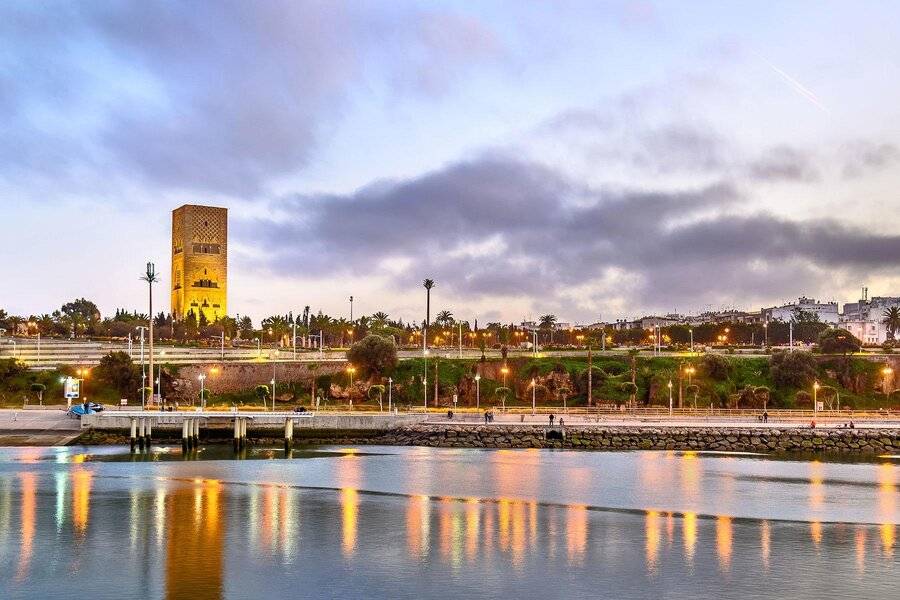
The Hassan Tower, an unfinished minaret from the 12th century, stands as a reminder of grand ambitions cut short. Beside it, the Mausoleum of Mohammed V showcases Moroccan craftsmanship at its finest—marble, zellige tilework, and carved cedar that took artisans years to complete.
The Kasbah of the Udayas, perched above the Atlantic, offers blue-and-white streets that echo Chefchaouen but with an ocean breeze. The Andalusian Gardens within provide a peaceful retreat where orange trees perfume the air and fountains create a soundtrack of tranquility.
Day 6: Casablanca—The Cosmopolitan Gateway
Casablanca might not be an imperial city in the traditional sense, but it represents modern Morocco’s ambitions and achievements. The Hassan II Mosque, completed in 1993, is a masterpiece of contemporary Islamic architecture. Its minaret soars 210 meters into the sky, making it the second-tallest religious structure in the world.
What makes this mosque special isn’t just its size but its location—built partially over the Atlantic Ocean, with a glass floor in the prayer hall that allows worshippers to pray directly above the sea. It’s a powerful symbol of Morocco’s relationship with both its Islamic heritage and its maritime history.
Day 7: Marrakech—The Red City’s Eternal Pulse
Your journey culminates in Marrakech, where the Atlas Mountains provide a snow-capped backdrop to a city that pulses with an energy unlike anywhere else in Morocco. The Jemaa el-Fnaa square transforms throughout the day—morning brings orange juice vendors and snake charmers, afternoon sees storytellers and musicians, and evening turns it into an open-air restaurant with smoke rising from dozens of food stalls.
The Koutoubia Mosque’s minaret has called the faithful to prayer since the 12th century, its proportions so perfect that it became the model for the Giralda in Seville and the Hassan Tower in Rabat. The Bahia Palace showcases the opulence of 19th-century viziers, with rooms that seem to multiply endlessly, each more ornate than the last.
But perhaps the most magical spot in Marrakech is the Majorelle Garden, where French painter Jacques Majorelle created a botanical paradise in electric blue and vibrant yellow. Later owned by Yves Saint Laurent, it represents the artistic dialogue between Morocco and the West that continues to this day.
Explore the Red City with our
The Journey’s True Meaning
This seven-day odyssey through Morocco’s imperial cities isn’t just about checking off landmarks. It’s about understanding how a nation preserves its identity while embracing the future. It’s about tasting tagine that’s been perfected over centuries, hearing the call to prayer echo across ancient rooftops, and feeling the weight of history in every stone beneath your feet.
Each imperial city reveals a different facet of Moroccan identity—Fes the spiritual, Meknes the ambitious, Rabat the refined, and Marrakech the vibrant. Together, they form a narrative arc that spans over a millennium, from the Berber dynasties through Arab conquest, European colonialism, and into modern independence.
When you finally watch the sun set over Marrakech’s medina on your seventh day, you’ll realize that you haven’t just visited Morocco—you’ve experienced the living continuity of one of the world’s great civilizations. The dust on your shoes will be the dust of empires, and the memories you carry will be woven from the same threads that have connected travelers, traders, and dreamers to this land for thousands of years.
Planning Your Imperial Cities Adventure
The beauty of this seven-day itinerary is its perfect balance—enough time to genuinely experience each city without feeling rushed, yet compact enough to fit into a week’s vacation. Spring (March to May) and fall (September to November) offer the most comfortable weather, though each season brings its own character to these ancient streets.
Whether you’re a history enthusiast, a photography lover, a foodie seeking authentic Moroccan cuisine, or simply someone yearning for an adventure that feeds the soul as much as it dazzles the eyes, Morocco’s imperial cities deliver an experience that transcends typical tourism. This is travel that transforms, that educates, and that reminds us why we wander in the first place—to discover not just new places, but new perspectives on the human story itself.
Comments
Post a Comment