A Marrakech Historical and Monuments Visit is more than a checklist of sights—it is a sensory immersion into a dynasty-rich past. From the architectural grandeur of the Koutoubia to the intimate secrets of the Saadian Tombs, every stone tells a story of sultans, scholars, and artisans. Are you ready to trade the modern world for an afternoon of timeless Moroccan wonder?
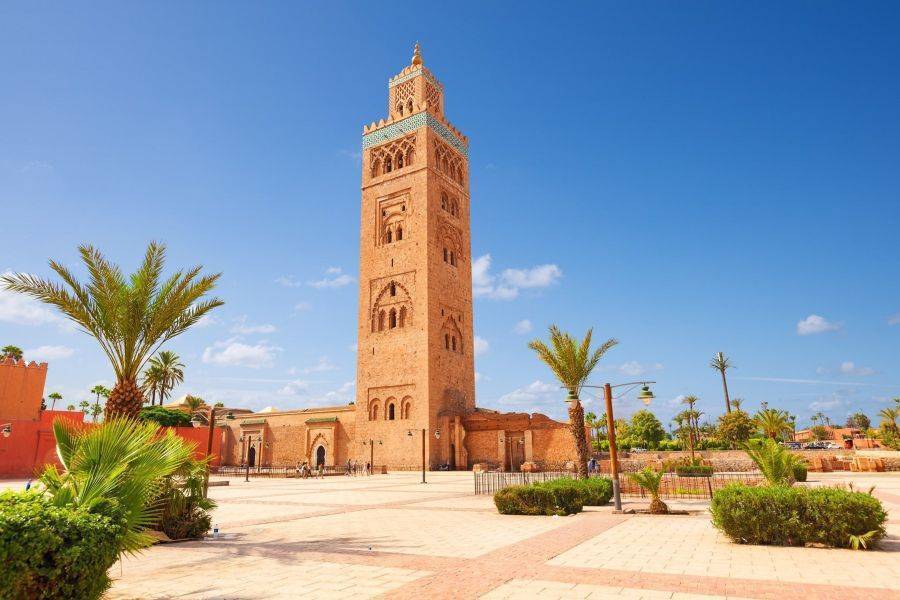
Table of Contents
- 1. The Heart of the Medina: The Koutoubia Mosque
- 2. The Grandeur of Bahia Palace: A 19th-Century Masterpiece
- 3. The Silent Secrets of the Saadian Tombs
- 4. Herbalism and Tradition: A Sensory Finale
- 5. Practical Information for Your Visit
- 6. Why Choose a Guided Historical Tour?
1. The Heart of the Medina: The Koutoubia Mosque
As you begin your Marrakech Historical and Monuments Visit, the first silhouette you will encounter is the legendary Koutoubia Mosque. Standing at 70 meters tall, its minaret is the compass of Marrakech—a masterpiece of Hispano-Moorish architecture that has dominated the skyline since the 12th century.
Walking around its base with a professional local guide, you’ll notice the delicate ceramic tilework and the curved arches that influenced the Giralda in Seville. While the interior remains a sacred space for prayer, the exterior gardens provide a tranquil escape. Have you ever wondered how an ancient structure can feel so vibrant and alive in the middle of a bustling metropolis? The Koutoubia is the answer. It represents the spiritual anchor of the city, connecting the modern streets to the Almohad era.
2. The Grandeur of Bahia Palace: A 19th-Century Masterpiece
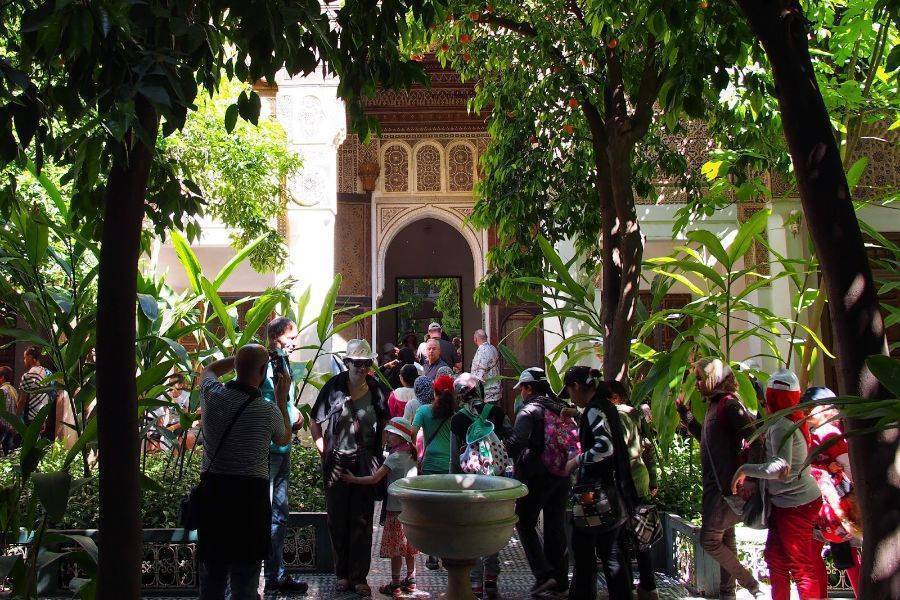
Leaving the spiritual height of the mosque, we journey toward the Bahia Palace. The name "Bahia" means "brilliance," and it certainly lives up to its title. Built in the late 19th century, this palace was intended to be the greatest of its time, a sprawling complex of 160 rooms, riads, and sun-drenched courtyards.
As you step inside, the temperature drops, and the air becomes sweet with the fragrance of fruit trees. You are surrounded by:
- Cedar wood domes intricately painted by hand.
- Zellij tilework that creates hypnotic geometric patterns.
- Marble floors that have cooled the feet of viziers for over a century.
This palace is a testament to Moroccan craftsmanship. Every corner reveals a new detail—a carved fireplace, a stained-glass window, or a private garden filled with jasmine. It’s easy to get lost in the beauty, but your guide ensures you understand the history behind the harem and the grand vizier’s council chambers.
Expert Tip: For those looking to contrast this urban splendor with the raw beauty of the desert, a sunset dinner in the Agafay Desert is the perfect evening complement to your morning of history.
3. The Silent Secrets of the Saadian Tombs
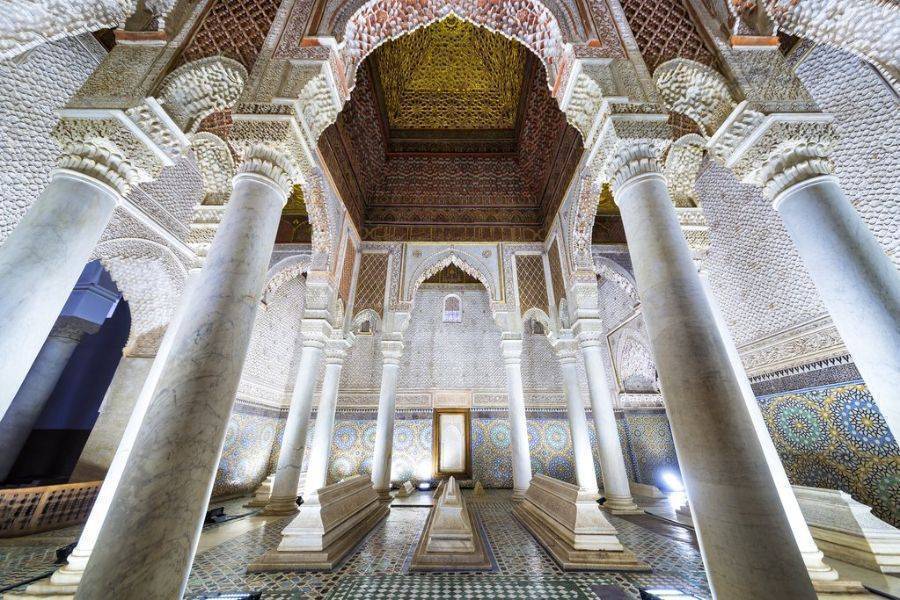
Perhaps the most mysterious stop on your Marrakech Historical and Monuments Visit is the Saadian Tombs. For centuries, these tombs remained hidden behind a locked door in the Kasbah, forgotten by the world until they were rediscovered by aerial photography in 1917.
Today, they stand as a breathtaking tribute to the Saadian dynasty, particularly Sultan Ahmad al-Mansur. The "Hall of Twelve Columns" is a sight to behold, featuring Italian Carrara marble and gilded honeycomb carvings (muqarnas) that seem to defy gravity.
How could something so beautiful be kept a secret for hundreds of years? The atmosphere here is one of profound peace. Walking among the graves decorated with colorful tiles, you feel a direct connection to the 16th century, a time of immense wealth and power for the Moroccan empire.
4. Herbalism and Tradition: A Sensory Finale
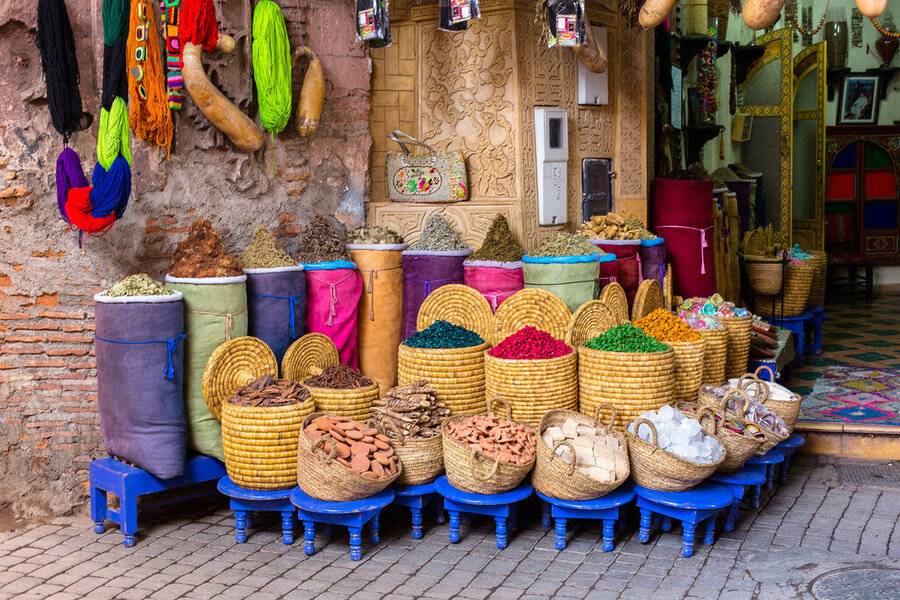
No historical exploration of Marrakech is complete without understanding the "living history" of its people. Before our 3-hour journey concludes, we visit a traditional Moroccan herbalist.
Morocco is world-renowned for its natural remedies and spices. Here, you’ll receive a presentation on:
- Argan Oil: The "liquid gold" of Morocco.
- Saffron and Cumin: The scents that define Moroccan cuisine.
- Medicinal Herbs: Traditional plants used for everything from skincare to wellness.
5. Practical Information for Your Visit
To make your Marrakech Historical and Monuments Visit a reality, Click Excursions has designed a seamless 3-hour experience that prioritizes comfort and authenticity.
| Feature | Details |
|---|---|
| Duration | 3 Hours |
| Availability | Everyday (12:00 or 17:00) |
| Languages | English, French, Spanish |
| Transport | Air-conditioned vehicle with Wi-Fi |
| Inclusions | Professional guide, Driver, Bahia Palace fees |
6. Why Choose a Guided Historical Tour?
Marrakech can be an overwhelming labyrinth. A guided Marrakech Historical and Monuments Visit allows you to bypass the confusion and dive straight into the "hidden beauty" that many tourists miss. The Medina of Marrakech is a world heritage site of "outstanding universal value"—a value that is best unlocked by those who live and breathe its history.
Are you ready to walk in the footsteps of Sultans? Don't leave your Moroccan adventure to chance. By choosing the best travel agency in Marrakech, you ensure a journey that is as educational as it is enchanting.
Explore More of Morocco:
- Looking for a nature escape? Discover the Ouzoud Waterfalls.
- Planning a longer stay? Check out our 7-Day Morocco Imperial Cities Itinerary.
- Dreaming of the dunes? Read our Ultimate Guide from Fez to Sahara.
Comments
Post a Comment